We use essential cookies to run this site. Optional analytics and advertising cookies stay off unless you allow them. Privacy Policy
Press materials, company background, and downloadable assets for KaleidoscopeAI™ and the KAL AI Growth System™.
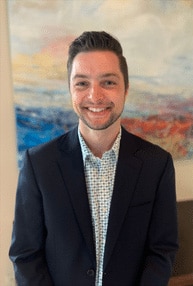
KaleidoscopeAI™ CGO Jeff Slater presents at GLAO 2026 on how AI chooses which orthodontists to recommend. Oct. 23, Columbus. kaldental.ai
Columbus, OH (October 15, 2026). Jeff Slater, Chief Growth Officer at KaleidoscopeAI™, will present “Marketing Gets You Seen, AI-Powered Branding Gets You Chosen” at the Great Lakes Association of Orthodontists (GLAO) 2026 Annual Session. The 60-minute session takes place Friday, October 23, from 3:00 to 4:00 p.m. in Bellows Ballroom C at the Hilton Columbus Downtown.
Patients increasingly ask AI tools such as ChatGPT, Google AI Overviews, Gemini, and Perplexity to recommend an orthodontist by name. Instead of a page of links, these tools typically name a short list of practices. Healthcare queries trigger AI-generated answers at a higher rate than any other industry, according to WebFX research across 2.37 million U.S. queries. Google remains where most patients begin their search, but the recommendation itself is increasingly made by AI.
Slater’s session draws on the 2026 Citation Gap Report, based on more than 120 KAL™ AI Visibility Audits conducted since March 2026. The report found that no orthodontic practice in the study scored AI Ready, the standard for consistent recommendation by AI answer engines, and that about a third have no schema markup on their site at all. Practices score strongly on the signals patients see, including reviews and Google Business Profile completeness, and weakly on the technical signals AI engines actually read.
The session reframes branding for the AI era. Doctors and practice teams will leave with:
“Marketing has always been about getting seen. What has changed is who makes the recommendation,” said Slater. “When a parent asks AI which orthodontist to choose, it names only a handful of practices, and the ones it names have a brand it can recognize and trust. I want every doctor and team member in the room to leave knowing which of those signals they already have and which ones they are missing.”
Jeff Slater is Chief Growth Officer at KaleidoscopeAI™, where he works with orthodontic practices across the U.S. and Canada on marketing strategy and AI visibility. His recent work includes an American Association of Orthodontists webinar on AI recommendations and bylined articles in Orthotown and Orthodontic Products.
KaleidoscopeAI™ is an orthodontic marketing agency and the creator of the KAL AI Growth System™, an AI-driven system built specifically for the orthodontic and dental professions. Founded on 17 years of digital marketing experience serving orthodontic practices, KaleidoscopeAI has audited more than 120 practices since March 2026. The KAL AI Growth System™ pairs AI with human review to close the Citation Gap through audits, content, SEO, AEO, ADA compliance, and web presence, making orthodontic practices visible and citable by AI answer engines including ChatGPT, Google AI Overviews, Perplexity, and Copilot. Visit kaldental.ai.
New KaleidoscopeAI™ study of 120+ orthodontic practice websites: not one is AI Ready. About a third have no schema markup at all. kaldental.ai
Victor, NY (September 10, 2026). New findings from KaleidoscopeAI™, based on audits of more than 120 orthodontic practice websites completed since March 2026, reveal that no practice examined scored AI Ready, the standard for consistent recommendation by AI answer engines. About a third of the practices audited have no schema markup on their site at all. The 2026 Citation Gap Report documents the pattern for the first time and introduces the Citation Gap: the distance between the customer-facing signals practices have invested in for years and the machine-readable signals AI systems require to cite them.
Reviews, Google Business Profile completeness, and contact details are strong across the profession. The layer underneath, the one only AI answer engines read, is largely absent.
Schema is code beneath the surface of a website that states plainly what the site represents: the practice, the doctors, the treatments, the location. About a third of practices examined have none of it. A further third hold so little that it does nothing for them.
No practice examined cleared the AI Ready threshold of 85. The strongest performer fell well short of it. More than half fell into the At Risk band: visible today only because nothing else nearby is easier for an engine to read.
AI answer engines like ChatGPT, Google AI Overviews, Perplexity, and Copilot do not rank pages the way traditional search does. They cite sources. Being cited requires material worth quoting, a clear declaration of what things are, and an arrangement an engine can lift an answer from. Practices in the study are adequate on the first, absent on the second, and inconsistent on the third. The visible layer is strong. The readable layer is weak.
Some vendors are framing this as an emergency. It is not one. Nothing expires on a particular date, and no practice will wake to find itself erased from AI results. Any vendor selling an approaching deadline is selling one that does not exist.
The absence of urgency does not mean the absence of consequence. AI engines currently fall back on traditional search signals when a site lacks schema, and that fallback holds only until an engine has something better to fall forward to. Schema is a one-time installation, no ongoing cost, no penalty for waiting, no prize for haste. What exists is the plain fact that a third of the profession has not done it at all, and that opportunity closes one competitor at a time.
KaleidoscopeAI’s AI Visibility Audit framework has been revised more than once since KaleidoscopeAI began measuring AI visibility in 2025, and it will be revised again. AI answer engines continually adjust what they reward. A scoring system that never changes is measuring an earlier version of the thing in front of it. Every finding in this report was tested against both versions of the framework in effect during the study period.
If a marketing agency is still grading orthodontic practices against the same checklist it used last summer, the resulting numbers say more about the agency than about the practices.
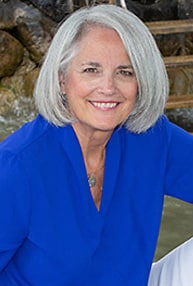
“The market is shifting faster than most orthodontic practices realize,” said Mary Kay Miller, Founder and CEO of KaleidoscopeAI. “Every industry response to AI so far has been to add AI features to existing marketing products and call it a solution. That does not close the Citation Gap. We built KAL™ as an AI-driven system, not a feature, purpose-built to make orthodontic practices visible and citable by the AI engines their patients are already using.”
“We see the same pattern in nearly every audit,” said Jeff Slater, Chief Growth Officer at KaleidoscopeAI. “The practice is proud of their reviews and their Google Business Profile. The schema is missing. The content is written for readers rather than for extraction. Once we show them what an AI engine actually reads on their site, the conversation changes.”
The 2026 Citation Gap Report sets out six steps in priority order. Establish where the practice stands with a category-by-category audit. Deploy schema first, since it is the weakest area by a wide margin, and on its own generally moves a practice a full band on the composite score. Reorganize existing content or add new content into direct answers and clear headings. Mark up the credentials the site already displays. Treat the work as ongoing maintenance rather than a one-time project. Judge suppliers on method rather than vocabulary.
The 2026 Citation Gap Report is based on the current KaleidoscopeAI™ AI Visibility Audit framework, evaluating 31 checkpoints across seven areas: Content Quality, Proof of Expertise, Answer Readiness, Schema, Local Signals, Patient Experience, and Competitive Position. The framework has been revised since KaleidoscopeAI began measuring AI visibility in 2025 and will keep evolving with AI answer engines. Findings held across both framework versions in effect during the study period. More than 120 practices have been audited since March 2026 across 37 states, Canada, and the Caribbean. Only practices with a pre-intervention baseline are included.
Full findings are at kaldental.ai/orthodontic-citation-gap-report/
KaleidoscopeAI™ is the leading AI-driven marketing system built specifically for the orthodontic and dental professions. Founded on 17 years of digital marketing experience serving orthodontic practices, KaleidoscopeAI has audited more than 120 practices since March 2026 and delivers the KAL AI Growth System™, an AI-driven system with human review that closes the Citation Gap through audits, content, SEO, AEO, ADA compliance, and web presence. The system is purpose-built to make orthodontic practices visible and citable by AI answer engines including ChatGPT, Google AI Overviews, Perplexity, and Copilot. Unlike platforms that added AI features to legacy products, KAL™ was designed from the ground up for a single profession. Visit kaldental.ai.
New system helps orthodontic practices get recommended by ChatGPT, Gemini, and Google AI Overviews as patients turn to AI for healthcare decisions
ORLANDO, FL (April 28, 2026) KaleidoscopeAI™ is announcing the launch of KAL™, the first AI Growth System designed specifically for orthodontic practices, at the American Association of Orthodontists (AAO) Annual Session in Orlando. The company is offering complimentary AI Visibility Audits to attending orthodontists.
KAL™ addresses a fundamental shift in how patients find orthodontists. Consumers are increasingly bypassing traditional search engines and asking AI platforms like ChatGPT, Gemini, and Google AI Overviews to recommend providers by name. These AI systems respond with a shortlist of three to five practices, and practices outside those recommendations are never considered.
Healthcare queries now trigger AI-generated answers at a higher rate than any other industry. By December 2025, 88% of healthcare-related Google searches produced an AI-generated overview before displaying traditional results, according to Search Engine Journal.
Almost 20 years ago, I introduced SEO to the orthodontic industry when most practices did not believe they needed a website. Today, we are at an identical inflection point. AI is now making the recommendation, not Google. The practices that act first will own their markets for years to come. That is exactly what KAL™ was built to do.
Mary Kay Miller, Founder and CEO, KaleidoscopeAI™
KAL™ evaluates an orthodontic practice’s digital presence across 32 checkpoints using a proprietary AI Visibility Score on a scale of 0 to 100. Pre-launch audits found that the average orthodontic practice scores below 40, meaning most practices are largely invisible to the AI tools patients are now using to choose their orthodontist.
The KAL™ AI Growth System is available immediately. Orthodontists attending the AAO Annual Session can receive a complimentary AI Visibility Audit at the KaleidoscopeAI™ booth #1115. Practices not attending can request a complimentary audit at kaldental.ai/audit/. A detailed media backgrounder with additional data and company history is available at kaldental.ai/press.
KaleidoscopeAI™ is the company behind KAL™, the AI Growth System for orthodontists and dental practices. Founded in 2008 as Orthopreneur Internet Marketing by Mary Kay Miller, the company has spent over 17 years helping orthodontic practices attract and convert new patients through digital marketing. For more information, visit kaldental.ai.
Download official KaleidoscopeAI™ press assets.
Mary Kay Miller
KaleidoscopeAI™
marykay.miller@kaldental.ai | (800) 387-0121
kaldental.ai