
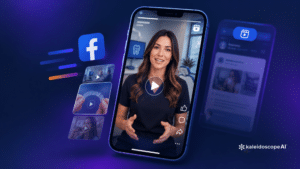
Now picture the app opening straight into a full-screen video instead. That isn’t hypothetical anymore. Facebook is testing exactly that, and Meta has said it will explore bringing the experience to the U.S. next year.
For orthodontic practices, the message is hard to miss. Facebook Reels for orthodontists is no longer a nice extra. Video is becoming the front door.
What Is Facebook Actually Changing?
In July, Head of Facebook Tom Alison announced a test of a “reimagined experience” that drops a subset of users into full screen video the moment they open the app. People in the test can opt out, and the classic Feed stays available as a second tab.
This month, the test went live. Some Facebook users in India and Indonesia now land directly in a full-screen video feed, and Instagram is testing a setting that opens the app to Reels instead of the main feed.
Meta’s stated plan is to start in select international markets this year and explore bringing it to the U.S. in 2027.
None of this came out of nowhere. Since June 2025, every new video posted to Facebook has been shared as a Reel, and the old Video tab became the Reels tab.
Bottom line: this is a test, not a switch that has already flipped. But Meta has told everyone where Facebook is headed, and it isn’t back toward the photo feed.
Why Should Your Practice Care About a Test Overseas?
Because Meta doesn’t run tests like this on a hunch. According to the company, Reels is now a $50 billion run-rate business with more ad revenue than YouTube, and younger users spend about 60% of their time on Facebook watching video.
Those younger users are a big part of your new-patient pipeline: young parents booking a first exam, and adults weighing aligners for themselves.
Here’s what most practices miss. If the U.S. version arrives next year, the practices that already have a library of real, original video will be ready on day one. Everyone else will be starting from zero after the feed has already moved.
Video takes time to get comfortable with. The best time to start is before you have to.
Does Video-First Facebook Mean Static Posts Are Dead?
No. Educational graphics, office announcements, team photos and community posts still do real work. They keep your page active, answer quick questions and show families you’re engaged.
Think about it the way we think about search. AI didn’t make SEO obsolete; it added a new layer on top of it. Google still drives a huge share of high-intent orthodontic searches, and that isn’t going anywhere. Video works the same way on social: it doesn’t replace your posting calendar; it adds what static posts can’t deliver.
That missing piece is your people. A parent can read that your team is warm and welcoming. A 30-second clip of your treatment coordinator walking through a first visit shows it.
What Does Facebook Video Have to Do with AI Search?
More than most practices realize. In June, Meta rolled out AI Mode in Facebook search, which answers questions using public content from across its apps, including posts, Groups and Reels.
So when a parent asks Facebook something like “what age should my child see an orthodontist,” the answer can be built from public Reels and posts. A practice with a clear, accurate video answering that exact question has given the AI something to work with. A practice with only seasonal graphics hasn’t.
No single Reel is guaranteed a spot in an AI answer. The pattern across platforms is consistent, though: AI tools favor clear, specific, original answers from sources they can identify. That’s the same principle behind the KAL™ approach to AI visibility on your website, and it now applies to your social content too.
One practical rule: use the same practice name, doctor name and city in every caption and profile. Consistency is how AI connects your videos to your practice.
What Kinds of Videos Should Orthodontists Actually Make?
The objection we hear most is “our doctor isn’t going to dance on camera.” Good news: nobody has to. The formats that work for practices are simple.
- Answer one question. What happens at the first consultation? Why do retainers matter? One video, one clear answer.
- Show and explain. A team member demonstrates an appliance on a model while the doctor provides a voiceover. Expertise, without the doctor on camera.
- Meet the team. Introduce the person who answers the phone. Families feel like they already know someone before they call.
- Walk through the office. Entrance, reception, consult room. Make the first visit feel familiar before it happens.
Keep patient information out of the shot and get written authorization before featuring any identifiable patient. Have the doctor review clinical explanations before they post.
Need a first idea? Use this prompt: “Here’s one thing we want families to know before their first visit.”
How Can a Busy Practice Make Video a Habit?
Video stalls when nobody owns it. A simple routine fixes that:
- Pick one content coordinator to collect ideas and keep filming on the calendar.
- Ask your front desk for the five questions they hear most. That’s your first month of topics.
- Block 30 minutes for filming, and batch two or three short clips at once.
- Start with one finished video a month, then build from there.
- Add captions to every video and include your practice name and city in the post text.
At KaleidoscopeAI™, our social media service pairs three static posts per week with video coaching at least once a month, so your calendar stays full while your team builds confidence on camera.
What Are Practices Asking About Facebook’s Reels-First Test?
Is Facebook switching everyone to a Reels-first feed?
Not yet. Facebook is testing a version of the app that opens directly to full-screen video for a subset of users in select international markets, including India. Users can opt out, and the classic Feed stays available as a tab. Meta has said it will explore bringing the experience to the U.S. next year.
Does our doctor have to be on camera?
No. Some of the most useful practice videos feature team members, office walkthroughs, or an appliance demonstration with the doctor providing a voiceover. What matters is clear, original content that reflects your practice.
Can Facebook Reels help my practice show up in AI search?
They can contribute. Facebook’s AI Mode builds answers from public posts, Groups and Reels, so clear videos that answer real patient questions give AI more to work with. No single video is guaranteed to appear, and your website and Google presence still carry most of the weight for high-intent searches.
My practice already shows up when parents ask AI for an orthodontist. Why should I update anything?
Showing up today is good news. For many practices, though, that position exists by default, because no nearby competitor has optimized yet. The moment one does, they don’t appear alongside you; they can replace you, and nothing in your reports will flag it. We call that the false security gap. The KAL™ AI Visibility Audit shows whether your position is defensible or just temporarily lucky.
What’s the Next Move for Your Practice?
Facebook’s layout will keep changing. The direction won’t: more video, more AI-built answers, and less room for practices whose pages are all seasonal graphics.
Start with one useful video this month. Then make sure the rest of your online presence, starting with your website, gives AI a clear picture of who you are and what you’re known for.