
We have now audited more than 120 orthodontic practice websites, scoring each across seven areas using the KAL™ AI Visibility Audit framework. Schema came back as the weakest area in the entire study. The findings are published in the 2026 Citation Gap Report, and they suggest the objection is right about the mechanics and wrong about what follows from them.
What is the objection, exactly?
The argument goes like this. Large language models read and understand plain text on their own. They do not need JSON-LD to work out that a page is about an orthodontist offering clear aligners in a particular city. So why maintain schema at all, especially on a site an AI tool helped build?
That first part is correct. AI engines do extract meaning from unstructured content and they are good at it. The conclusion built on top of it is where the argument falls apart.
What the audit data actually found
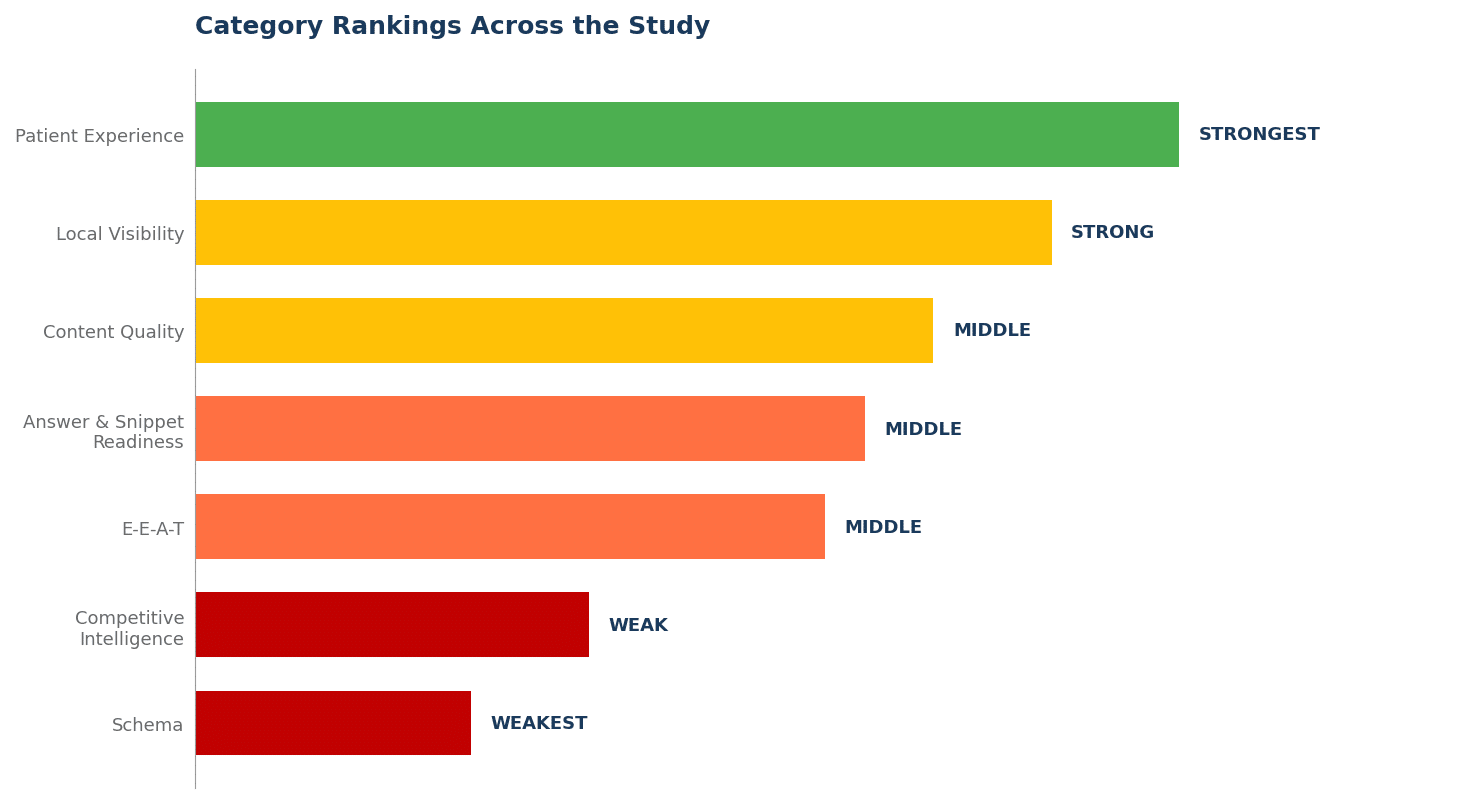
Schema was the lowest-scoring of the seven areas measured, well below Patient Experience and Local Visibility. About a third of the practices audited have no schema markup at all. A further third hold so little that it does nothing for them. Only a minority carry enough for it to function as intended.
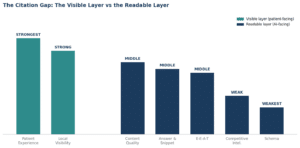
That is not a small technical gap. It is the largest single area gap in the study, on a measure that several agencies are currently telling practices not to worry about.
About a third of the practices we audited have given AI engines nothing at all to read. Not one practice in the study reached the AI Ready standard.
So do AI engines really still need schema?
They do not need it to understand a page. They use it to decide how much to trust what they understood.
When an engine falls back on plain content, it is inferring rather than reading. It is the difference between a curriculum vitae that states the job title at the top and one that describes twenty years of work and expects the reader to draw the same conclusion. The inference is usually correct. It costs the reader effort. And it holds only until a second curriculum vitae arrives with the title printed plainly at the top.
That is what happens when two practices in the same market have comparable content and only one has proper Practice, MedicalOrganization and MedicalProcedure schema in place. The one with schema tends to get cited more consistently, because the engine has a higher-confidence read on what the source represents.
Semantic HTML is not a substitute. Clean heading structure helps, but schema explicitly declares entity relationships that HTML can only imply, and answer engines are increasingly built to reward explicit declarations over implicit ones.
Falling back works until the engine has something better to fall forward to.
Is this urgent?
No, and it is worth saying so plainly, because plenty of vendors are currently suggesting otherwise.
Nothing expires on a particular date. No practice will wake up erased from AI results. A third of the practices in our study have no schema at all and are still receiving patients, which is direct evidence that engines are falling back on traditional search signals exactly as the critics describe. Any vendor presenting this as an emergency is selling a deadline that does not exist.
Schema is closer to wiring a building than to renting one. It is installed once, it does not wear out, it carries no monthly cost, and it costs much the same whether it is done this quarter or a year from now. There is no penalty for waiting and no prize for haste.
What there is, at present, is the plain fact that a third of the profession has not done it at all. That opportunity is not closing on a schedule. It closes one practice at a time and one town at a time, as competitors get around to it.
Is schema just an old SEO thing?
Schema is not standing still. It is currently expanding to add types built specifically for AI answer engines, including citation and evidence schemas designed for exactly the environment this objection claims does not need them.
Practices that treat schema as a one-time setup task from years ago tend to be the same practices carrying stale review counts and outdated service schema without noticing, because schema lives in a script tag that is invisible on the page. Nobody looking at the site catches the drift. An audit does.
If your website was built by an AI platform
More agencies and platforms now offer AI-built websites, and the same reasoning sometimes gets applied there too. It holds up no better for an AI-built site than for a hand-coded one.
An AI-built website can and should include full schema from the day it launches. Speed of build has nothing to do with whether the structural layer underneath is done properly. That is how we build inside the KAL AI Growth System™: AI speeds up the build, and the structural work ships with it rather than being bolted on afterward.
An AI-built website without schema is not a modern approach. It is the same old gap, just built faster.
If a practice already has an AI-built site and is not sure whether schema was part of it, that is a five-minute check, not a reason to start over.
Where schema sits on the priority list
Schema is the weakest area in the study and the most tractable. Unlike content gaps, which take real writing time to close, it is a technical deployment. A baseline covering the practice, the physicians, the location, the treatments and the reviews can generally be installed in a single pass, and on its own tends to move a practice a full band on the composite score.
Lowest current score, fastest realistic gain, one-time cost. For a practice deciding where to spend the next quarter, that combination is hard to argue with.